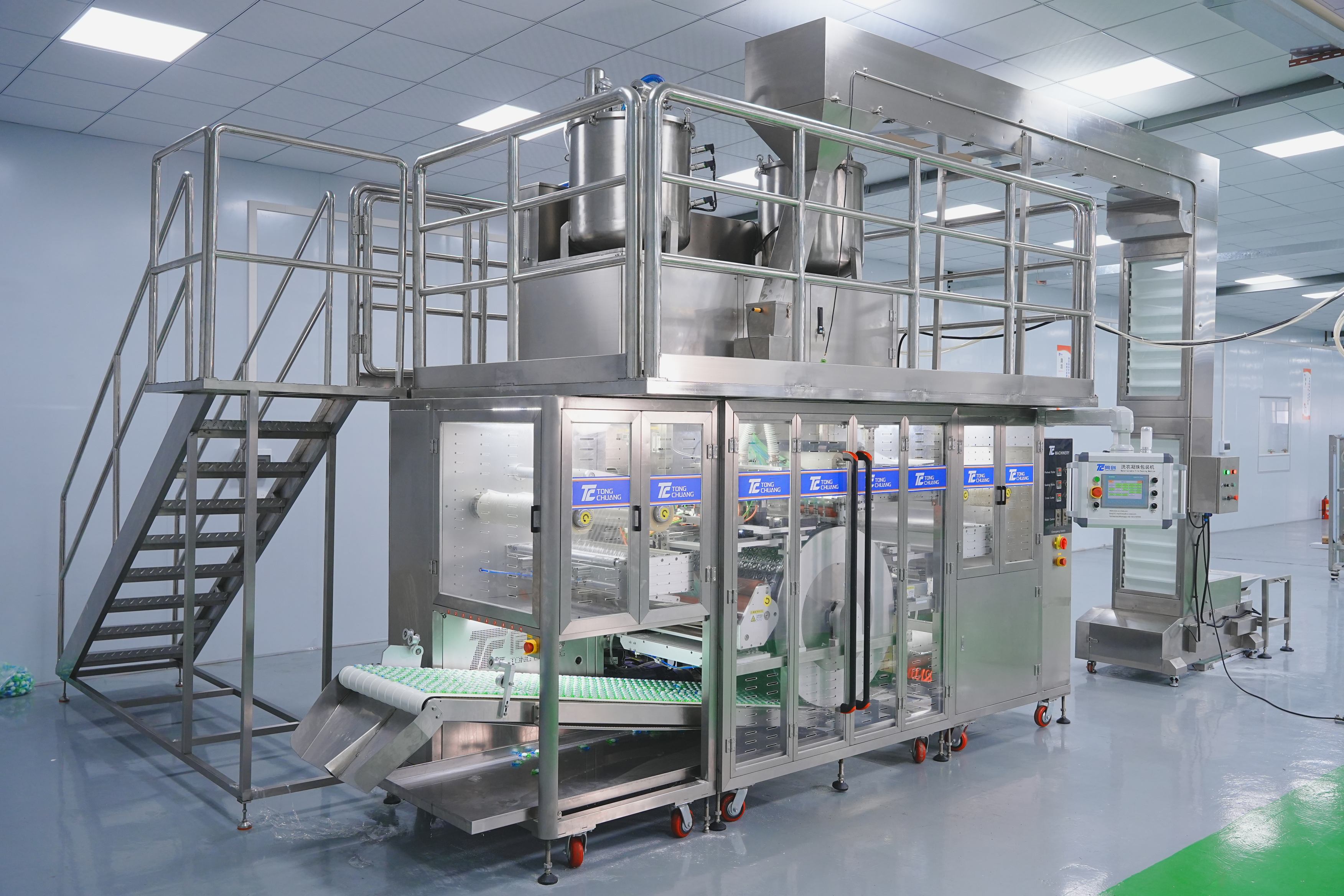
Complete Guide to Selecting an Efficient Laundry Pod Packaging Machine

Select a laundry pod packaging machine by matching the pod design, detergent properties, PVA film, required saleable output, changeover pattern, factory utilities and downstream line. Compare performance demonstrated with your materials and acceptance conditions—not nominal speed alone.
- Define chambers, dose, dimensions, formula and film before requesting quotations.
- Evaluate good pods per hour, dosing variation, seal integrity, waste and downtime together.
- Place utilities, guarding, documentation and FAT criteria in the purchase specification.
Freeze the product specification
State single- or multi-chamber geometry, dose per chamber, formula viscosity range, permitted variation, film grades and retail-pack requirements. Test the actual formula-film combination for storage and process compatibility.
Convert demand into verified capacity
Calculate saleable pods per shift after changeovers, cleaning, planned stops and rejects. Request output test conditions showing product, film, run duration and reject definition.
Verify quality and integration
Agree sampling, dose-weighing, leak or seal tests, changeover trials and alarm challenges. Confirm power, compressed air, environmental controls, drainage, guarding and interfaces with counting, cartoning and labeling equipment.
Contract the acceptance test
Make the FAT state materials, run time, target good output, quality limits, retest rules, training, spare parts and site-acceptance responsibilities.
No. Use stable saleable output, waste, labor, changeover time and maintenance demand under defined conditions.
No universal compatibility should be assumed. Require trials using approved film grades and representative formulas.
Request configuration drawings, test records, risk and electrical documentation, manuals, parts lists, warranty scope, training plan and signed FAT results.
Fundamental machine concepts
A pod machine forms cavities in water-soluble film, meters detergent, applies a covering film, seals and cuts or releases the pod. Rotary and flat-plate layouts can differ in tooling, motion and footprint; compare them through this machine structure comparison.
Application and model matching
| Scenario | Selection priority |
|---|---|
| Trials or market entry | Low-volume flexibility and simple operation |
| Stable single-chamber demand | Repeatable output and low waste |
| OEM or multi-chamber work | Recipe range, independent dosing and changeover control |
Use the TC model selection tree to shortlist TC-G200, TC-G360, TC-G530, TC-G660, TC-P660 or a customized configuration; obtain current, project-specific specifications from the supplier.
Parameters, safety and compliance
Compare verified good output, dose variation, seal defects, film consumption, changeover time, utilities and maintainability. The ISO 12100 standard overview explains risk assessment and risk reduction principles. It supports requiring a documented machine-specific risk assessment rather than treating a general certificate as proof of safe integration.
The International Electrotechnical Commission's IEC 60204-1 publication covers electrical equipment of machines. Buyers should therefore specify destination-market electrical requirements and verify drawings, protective measures and tests. For EU projects, the official Regulation (EU) 2023/1230 defines machinery obligations; applicability and transition timing should be reviewed with a qualified compliance professional.
Film, dosing and seal evaluation
Run the proposed PVA film and formula across declared operating limits. Record individual chamber weights, seal appearance, leakage, deformation, start-up waste and results after controlled storage. EU consumer laundry pods also have product-level soluble-packaging provisions under the European Commission's Regulation (EU) No 1297/2014. This does not certify the machine; it means EU-bound projects must align equipment capability with the finished product's applicable packaging requirements.
Commercial comparison and evidence
Compare lifecycle cost using labor, film and detergent loss, tooling, maintenance, parts and downstream constraints. Review the high-efficiency machine ROI before paying for unused capacity. Ask suppliers to demonstrate claims with your specified materials and record every pass criterion in the contract.
How Does Laundry Pods Packaging Equipment Build a Complete Production Solution